
Service West Chicago & nearby
Mulch installation in West Chicago
Fresh mulch makes beds look finished, but its real job happens below the surface. It holds moisture, keeps soil temperatures steady and suppresses weeds. We spread it evenly, at the right depth.
5.0 6 Google reviews Locally owned Licensed & insured
- 5.0 on Google 6 reviews
- Licensed & insured Trained & certified
- Locally owned West Chicago shop
- Free estimates Outlined in detail
Better beds
More than a fresh look
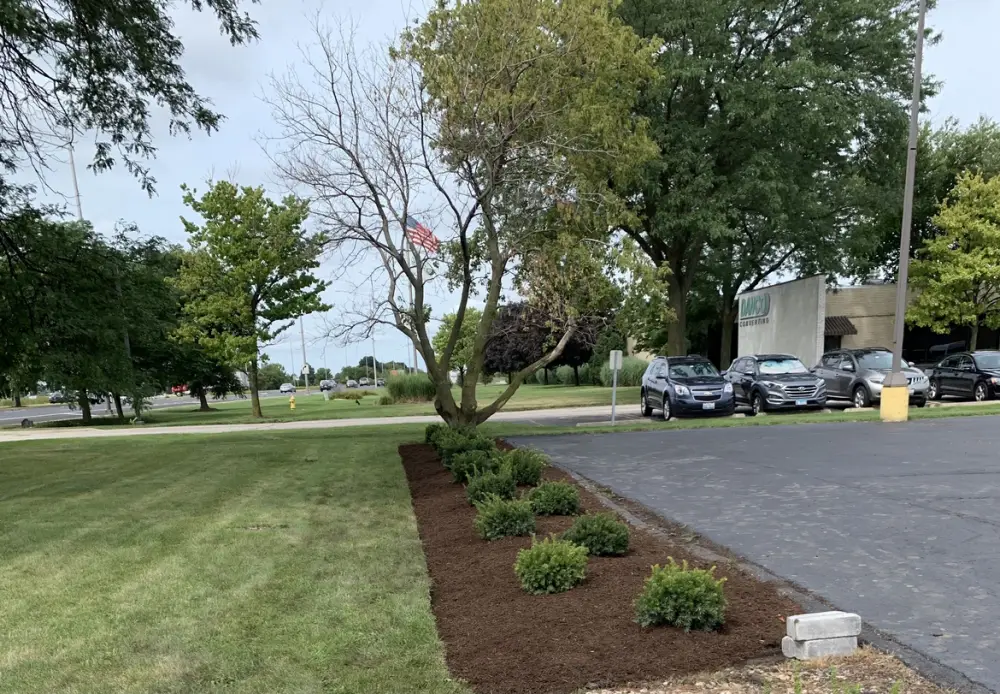
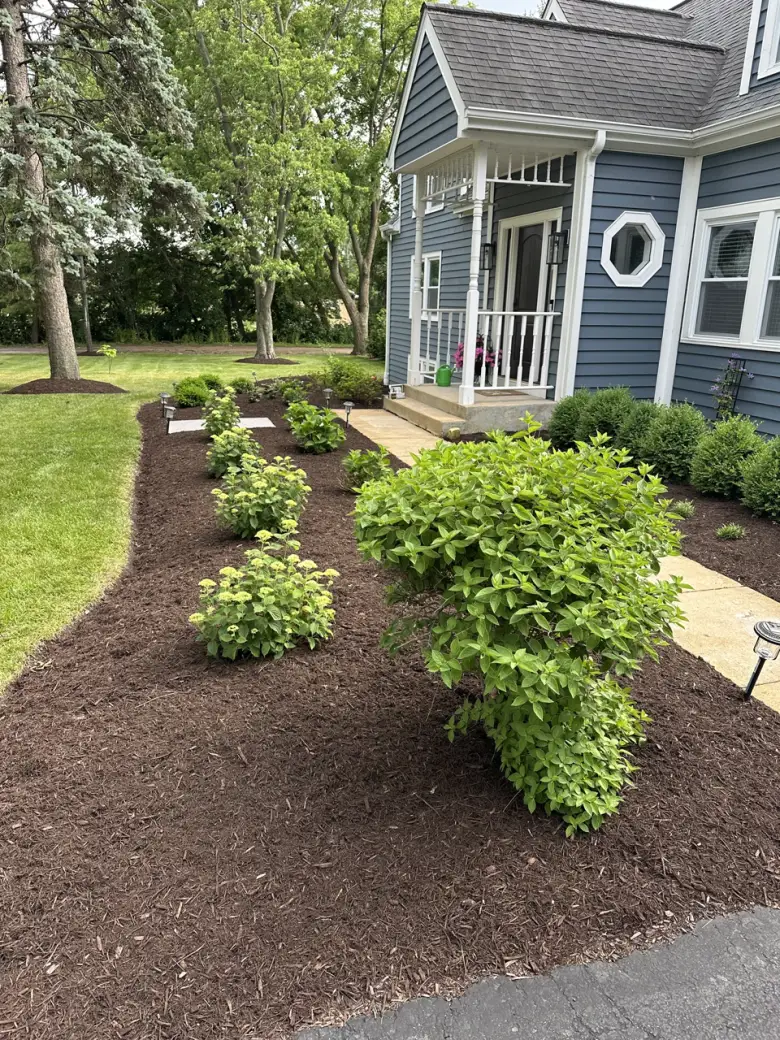
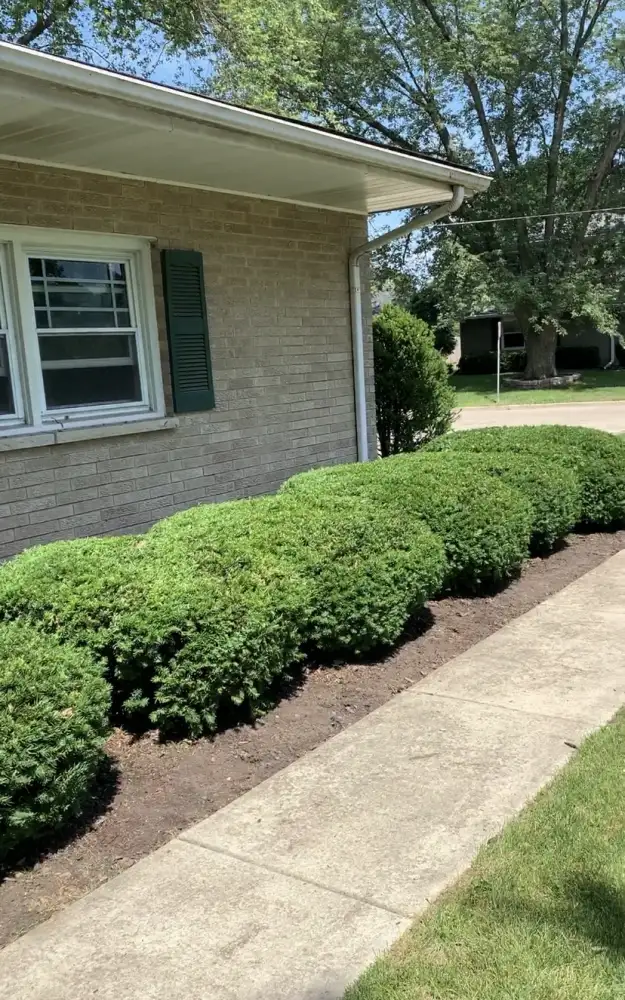
A good layer of mulch works for your plants all season. It slows evaporation so beds need less watering, insulates roots from summer heat and winter cold, and blocks the light weed seeds need to sprout. On slopes and along downspouts it also helps keep soil from washing away.
As it breaks down, mulch adds organic matter back to the soil, which improves its structure and feeds the plants growing in it. That's why a yearly top-up is worth doing even when last year's layer still looks okay from the street.
Depth is where mulch can do more harm than good. Too thin and weeds push through. Piled too thick, or heaped against tree trunks and shrub stems, it holds moisture against the bark and can invite rot and pests. We spread an even layer at the proper depth and keep it pulled back from trunks and stems.
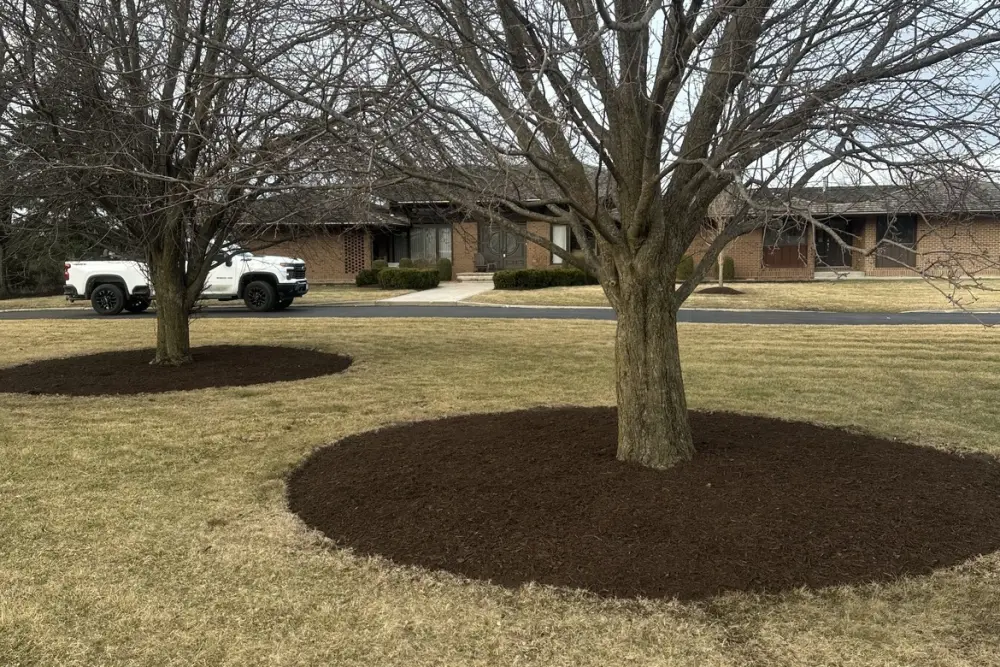
Mulch should look like a blanket around a tree, never a volcano.
Know the signs
Time to refresh the mulch
You can see bare soil
Once soil shows through, the layer is too thin to hold moisture or block weeds.
Color has faded to gray
Old mulch weathers and breaks down. A faded bed usually means the layer has thinned out too.
Weeds keep popping up
Weeds coming through steadily are a sign the mulch isn't deep enough to shade them out.
Beds dry out fast
If plants wilt soon after watering, a fresh layer will help the soil hold moisture longer.
New plants just went in
Freshly planted shrubs and flowers benefit from mulch right away, which protects their roots while they settle in.
How it works
How mulch installation works
Questions before we start? Call or text 630-746-4248, or send photos of the yard.
Request an estimate- 01
Measure and quote
We look at your beds and tree rings, in person or through photos, and outline the job in detail.
- 02
Prep the beds
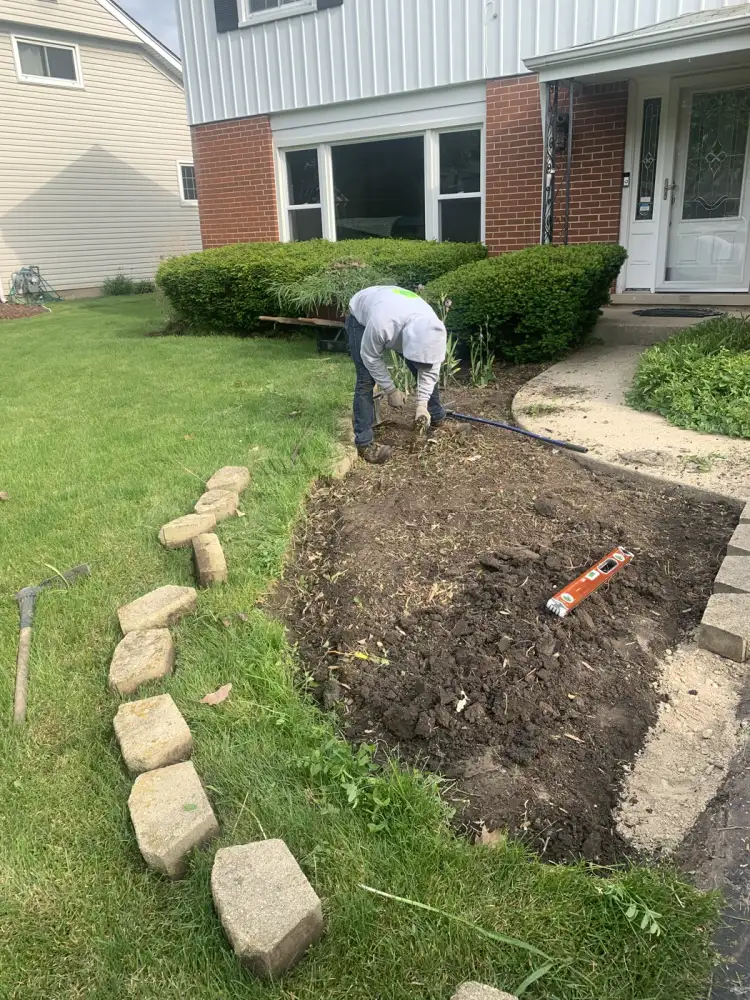
Debris and weeds come out, and fresh edges can be cut if you'd like them included.
- 03
Spread it evenly
Mulch goes down at the right depth across each bed, worked carefully around plants.
- 04
Tidy up
We pull mulch back from trunks and stems, then clean hard surfaces before leaving.
5.0 on Google · 6 reviews
Neighbors say it best.
How deep should mulch be?
About 2 to 3 inches is the common recommendation for most beds. Thinner layers don't do much against weeds, and much thicker ones can hold too much moisture. We spread it at the depth that suits your plants.
Does old mulch need to be removed first?
Not usually. Old mulch breaks down into the soil, which is good for it. If the existing layer is already thick, we'll recommend a lighter top-up instead of piling on more.
When is the best time to mulch?
Spring is the most common time, after cleanup and before summer heat. Fall mulching also helps protect roots through winter. Ask us about the timing that fits your yard.
Can you edge the beds at the same time?
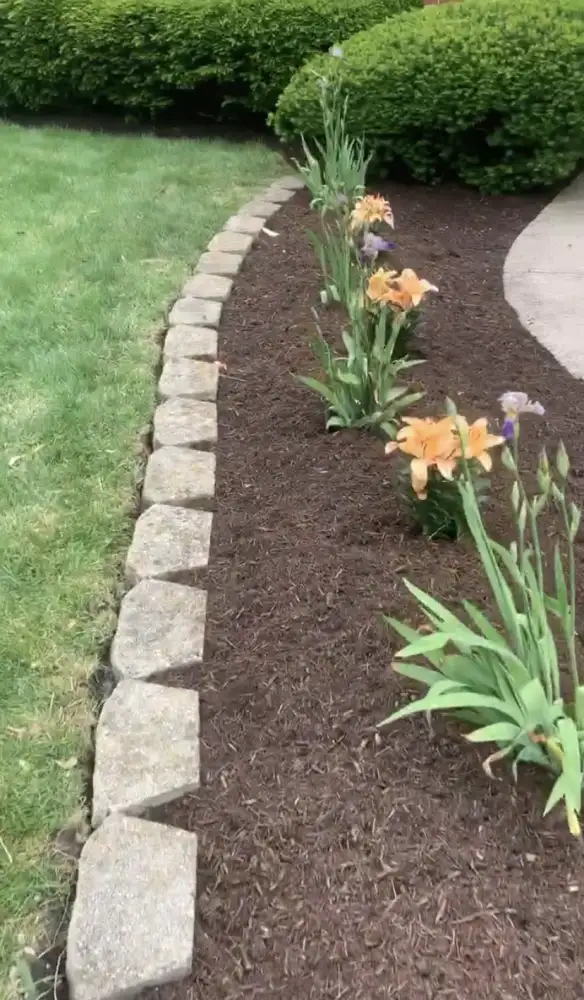
Yes. Fresh edges and new mulch go together well. Ask about adding edging or a stone bed border when you request your estimate.
Mulch installation near you
Free, no-obligation estimates
Ready for a yard you don't have to think about?
Tell us what your property needs, or text a few photos. We'll come back with a clear, detailed estimate.
Serving West Chicago & nearby
All service areas